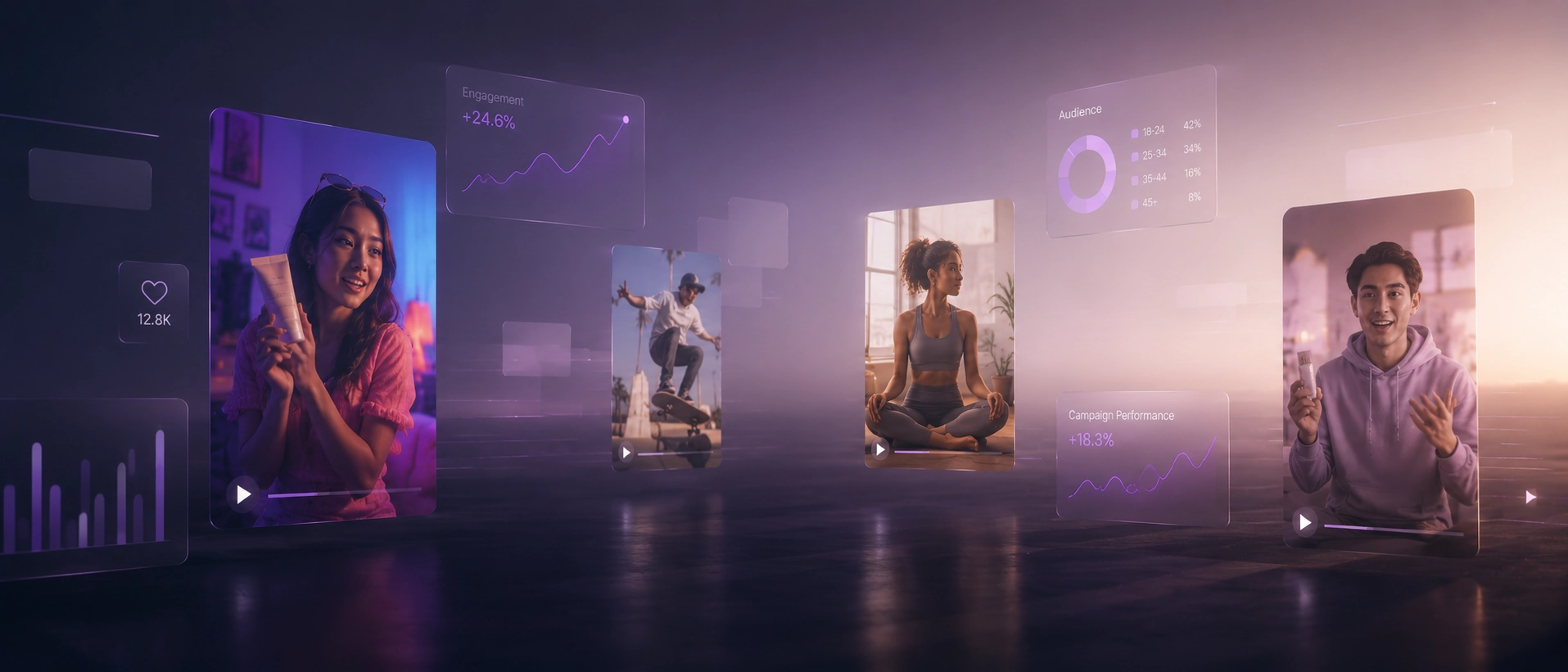
AI-Native Creator Marketing
From trend discovery to creator management and agentic campaign operations.
Some products solve a defined problem. Startups first have to discover what the problem is.
Over two years, Vizzy evolved through three product generations as our understanding of the market—and what AI made possible—continued to evolve.
We Thought Insights Were the Product
Short-form video was growing rapidly, but brands struggled to understand why some videos succeeded while others didn't.
The thesis: multimodal AI could uncover those patterns and turn them into actionable insights.
The product solved a real problem, but it wasn't a profitable business.
Most customers were only willing to pay around $99–199/month for AI insights. Yet customer interviews revealed they were spending $20,000–50,000 every month on creator video production.
From Insights to Execution
Insights only create value when they change how content gets made.
We pivoted Vizzy toward execution: helping brands find creators, guide production, and deliver consistently better videos.
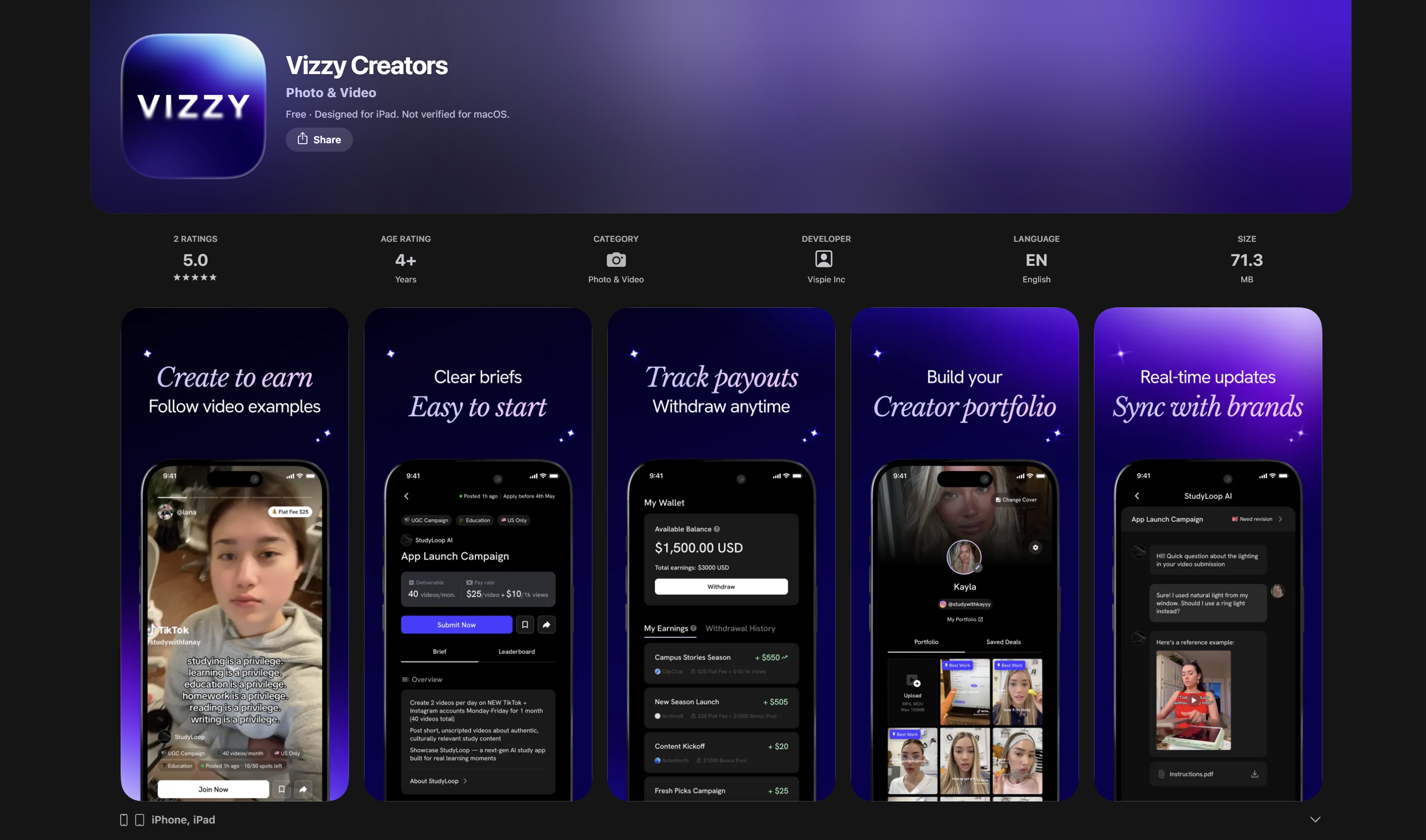
Designing for Creators
While brands launched campaigns, creators determined the quality of every video—so I led design on the creator experience.
Beginner-Friendly by Design
Designed for first-time creators—from onboarding to content submission.
Learn from Proven Patterns
Campaigns became a video-first feed, making opportunities easier to discover while exposing creators to proven creative patterns.
Improve Every Submission
AI reviewed every submission and suggested improvements before creators hit submit.
Impact
The pivot validated both the product and the business.


Growth exposed a new bottleneck: operations couldn't scale as fast as the business.
Designing Human-AI Collaboration
As the business scaled, every campaign meant more creators to brief, match, and review—all coordinated by hand. I redesigned the enterprise workspace around autonomous AI agents.
Persistent Context
Agents continuously learned campaign requirements, creator preferences, and working instructions, building shared context that improved over time.
Autonomous Execution
Users gradually delegated responsibilities to AI agents, deciding which tasks remained human-led and which became autonomous.
Human Oversight
Campaign progress stayed visible at all times, while operators reviewed only the decisions that required human judgment.
While many capabilities are still evolving, the design direction is clear: move people away from repetitive coordination and toward judgment, creativity, and decision-making.
Looking Forward
Over two years, the product changed dramatically—but so did the technology behind it. Designing through each wave of progress has been one of the most rewarding experiences of my career. ✌️