
Tesla Pricing Platform
A centralized pricing platform driving pricing decisions behind 98% of Tesla's revenue across global markets — designed from zero to one.
Tesla is known for changing prices frequently. Few people realize how those price changes were actually made behind the scenes.
The Initial Request
The finance team needs to make pricing decisions with accurate and speedy execution, implementing controls and audits required by the board.
Before jumping into solutions, I wanted to understand the problem.
- What pain points exist today?
- Why does this matter?
- How should success be measured?
Understanding the Workflow
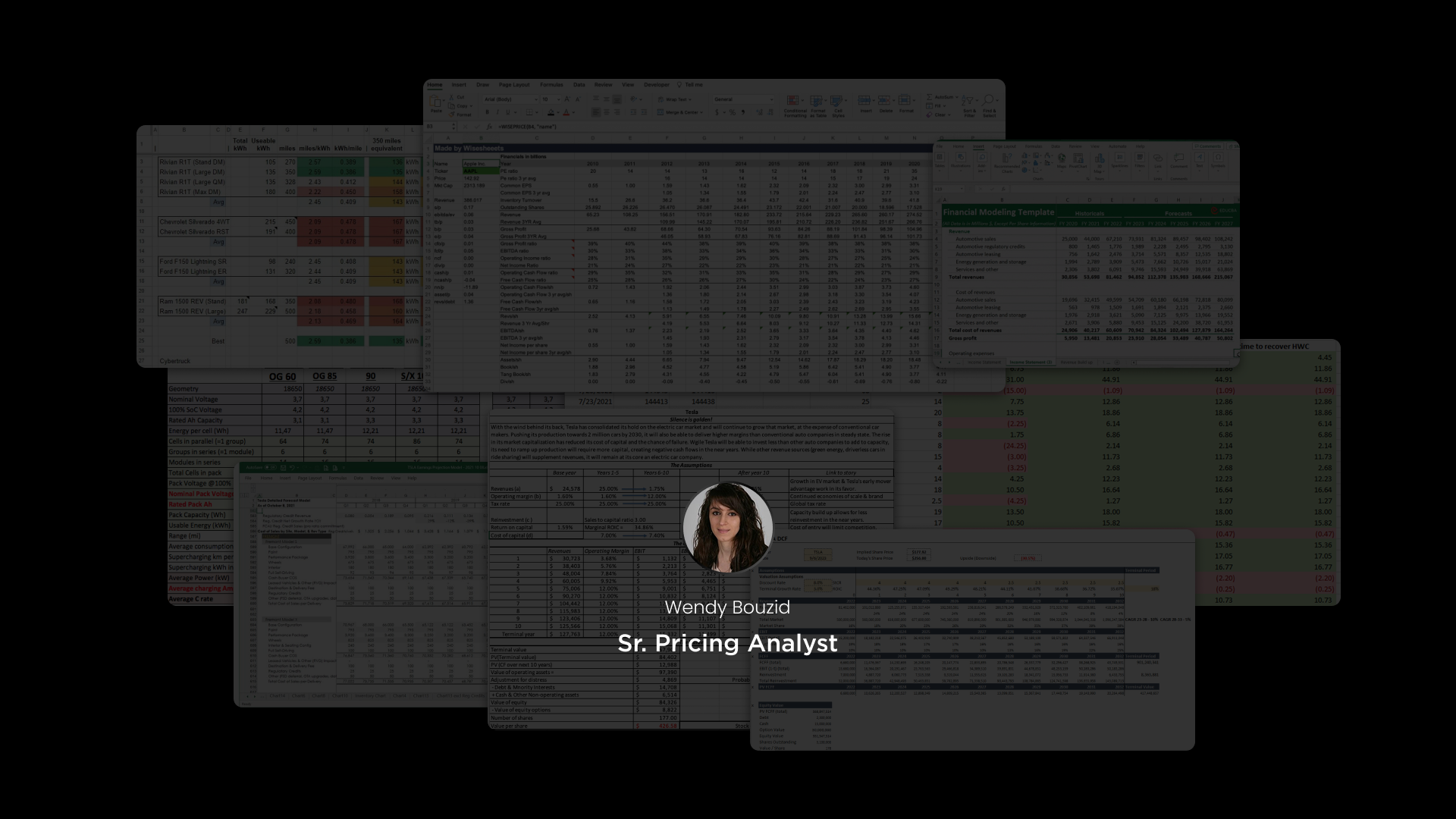
To understand the request, I visited the pricing team at Tesla's Bay Area office and observed how pricing decisions were actually made. One thing immediately stood out. Pricing decisions were spread across dozens of spreadsheets and browser windows.
Key Findings
Why It Matters
At Tesla's scale, even a small improvement in pricing decisions could translate into substantial business impact.
A Phased Roadmap
Rather than solving everything at once, I planned a product roadmap that gradually evolved the platform — from centralizing execution to supporting better pricing decisions.
Build a Foundational Pricing Workflow
Build the operational foundation for scalable pricing execution.
Support Multiple Product Lines
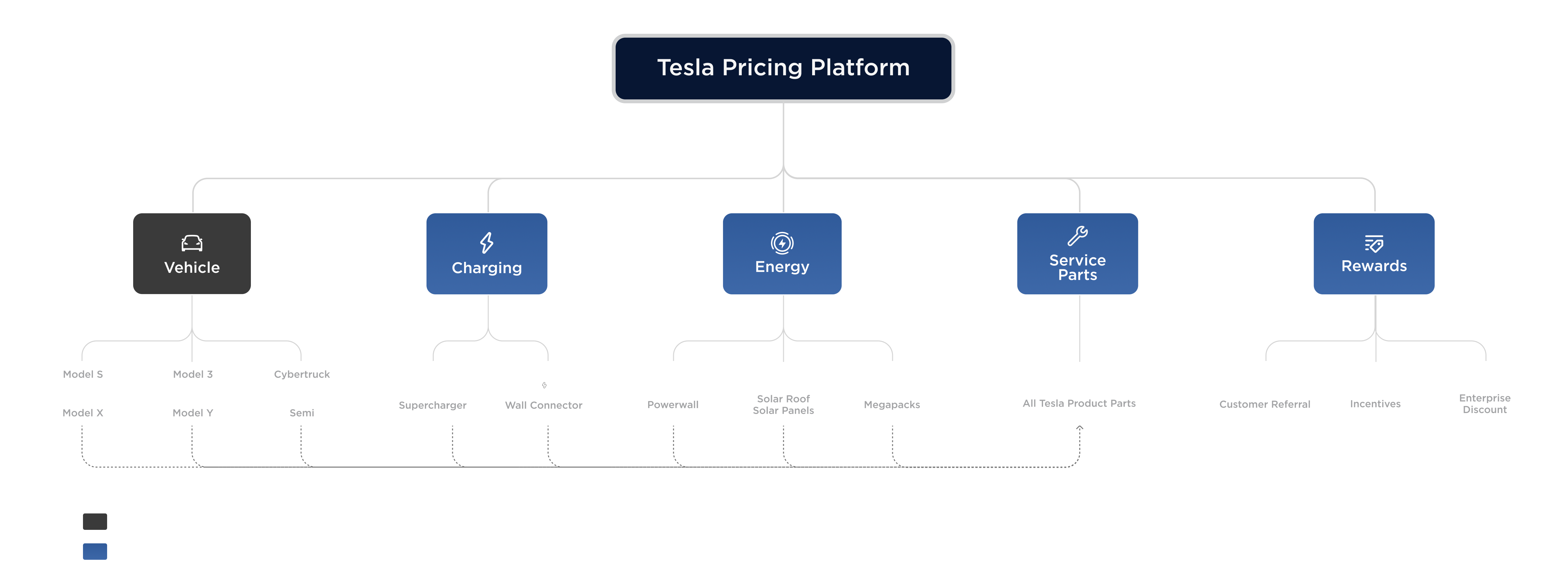
Unified pricing workflows across vehicles, charging, energy, service parts, and rewards.
Standardize Pricing Workflows
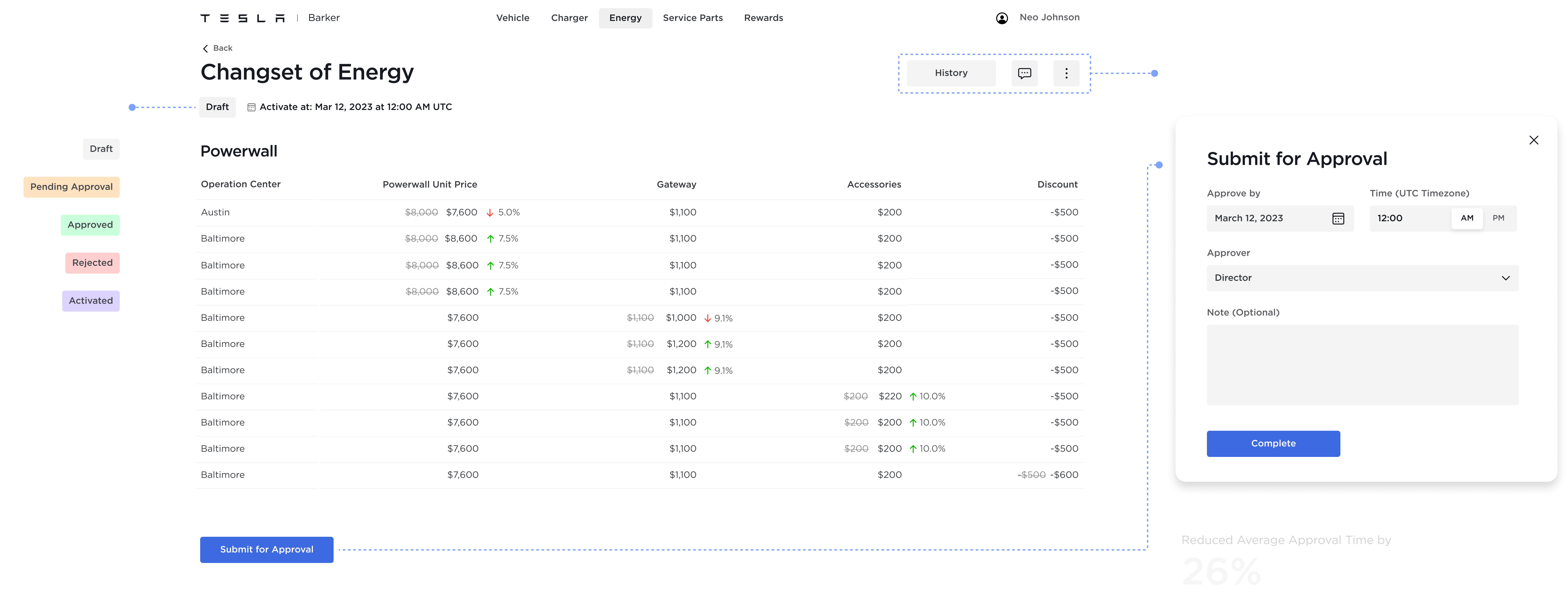
Introduced changesets and approval workflows to replace fragmented execution with a structured, traceable process.
From Executing to Editing Prices
Move pricing operations from spreadsheets into the platform.
With the execution workflow in place, the next step was to replace spreadsheet-based editing with native pricing tools for large-scale pricing operations.
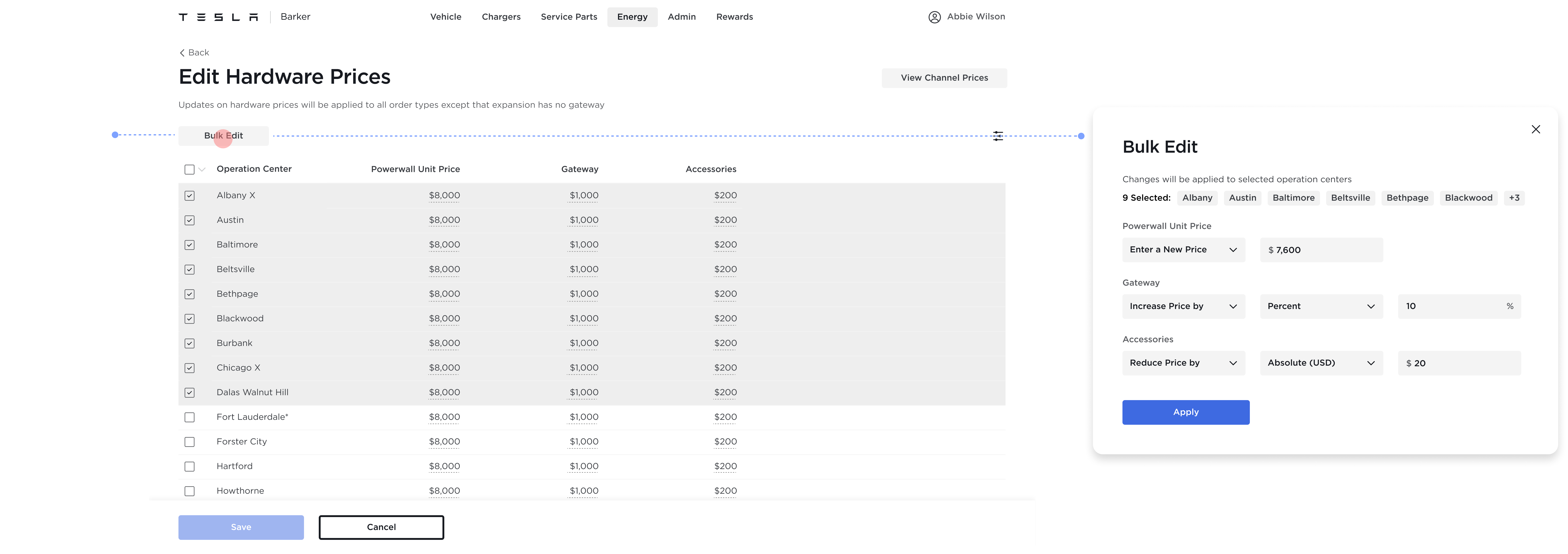
Native bulk editing transformed repetitive spreadsheet workflows into structured platform operations.
Enable Better Pricing Decisions
With pricing operations fully moved into the platform, the next step was to help users make faster and more confident pricing decisions through data, recommendations, and validation.
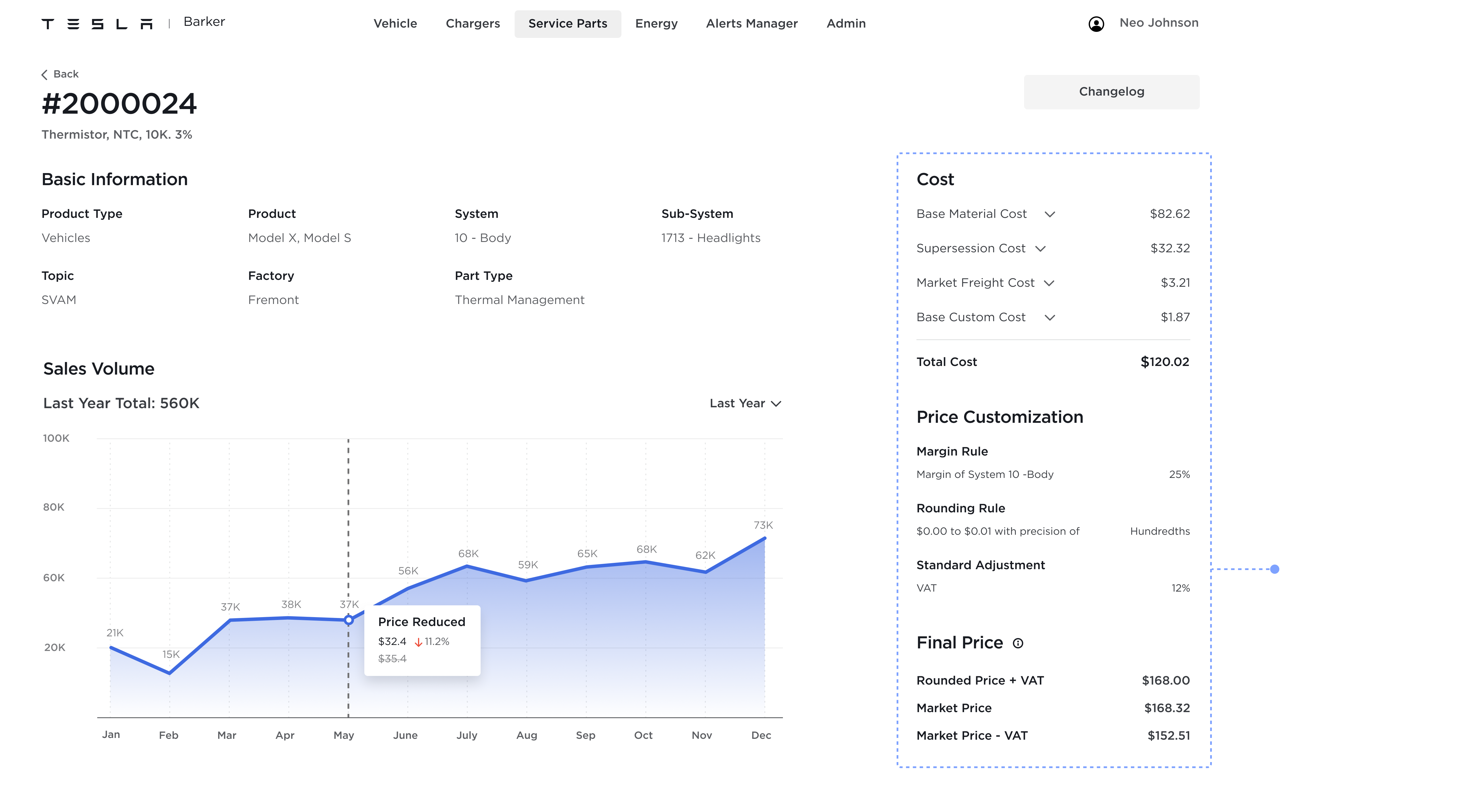
Pricing Insights
Historical sales trends provided the context needed to evaluate pricing decisions.
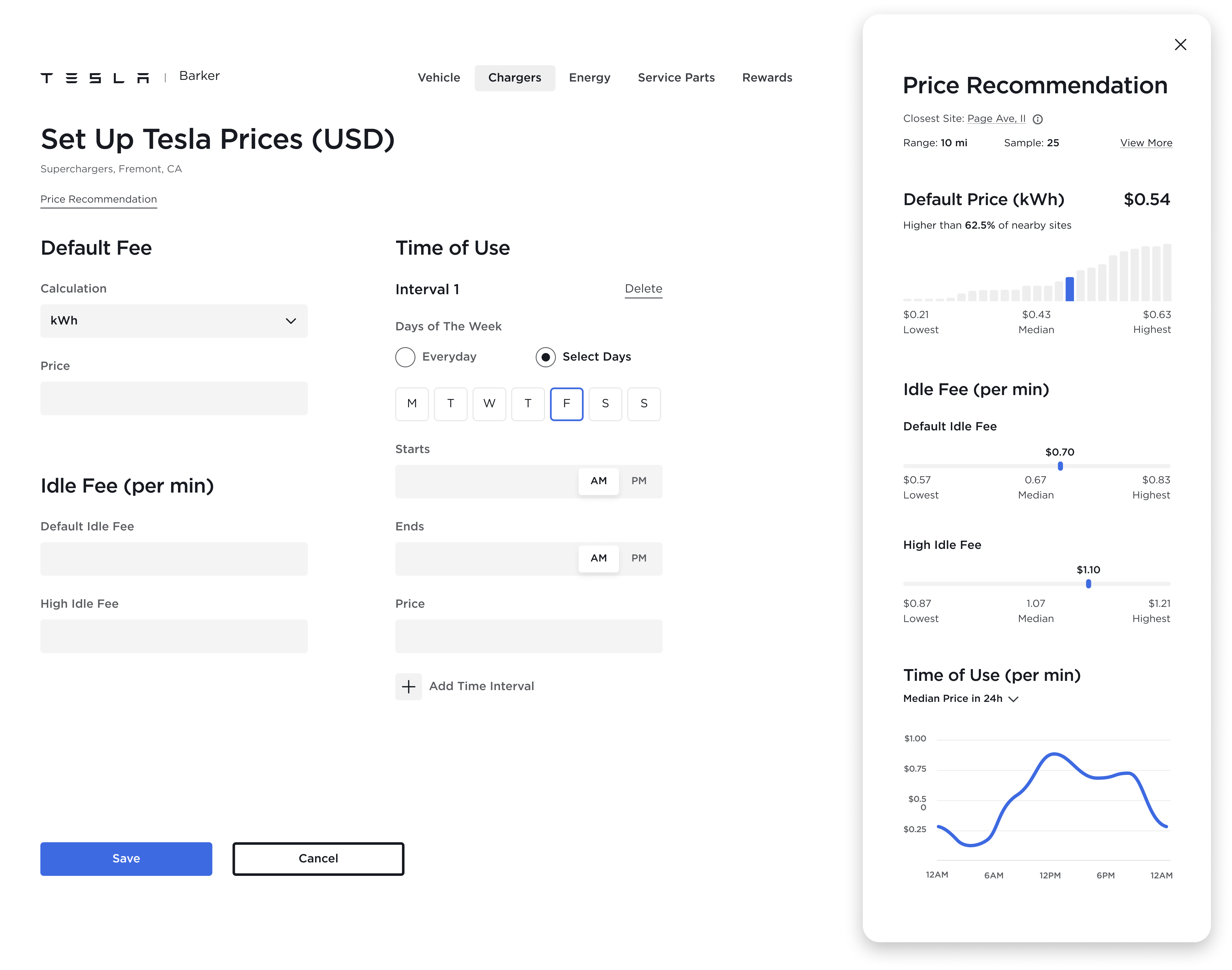
Price Recommendation
Recommended prices reduced the time required to set new charging prices.
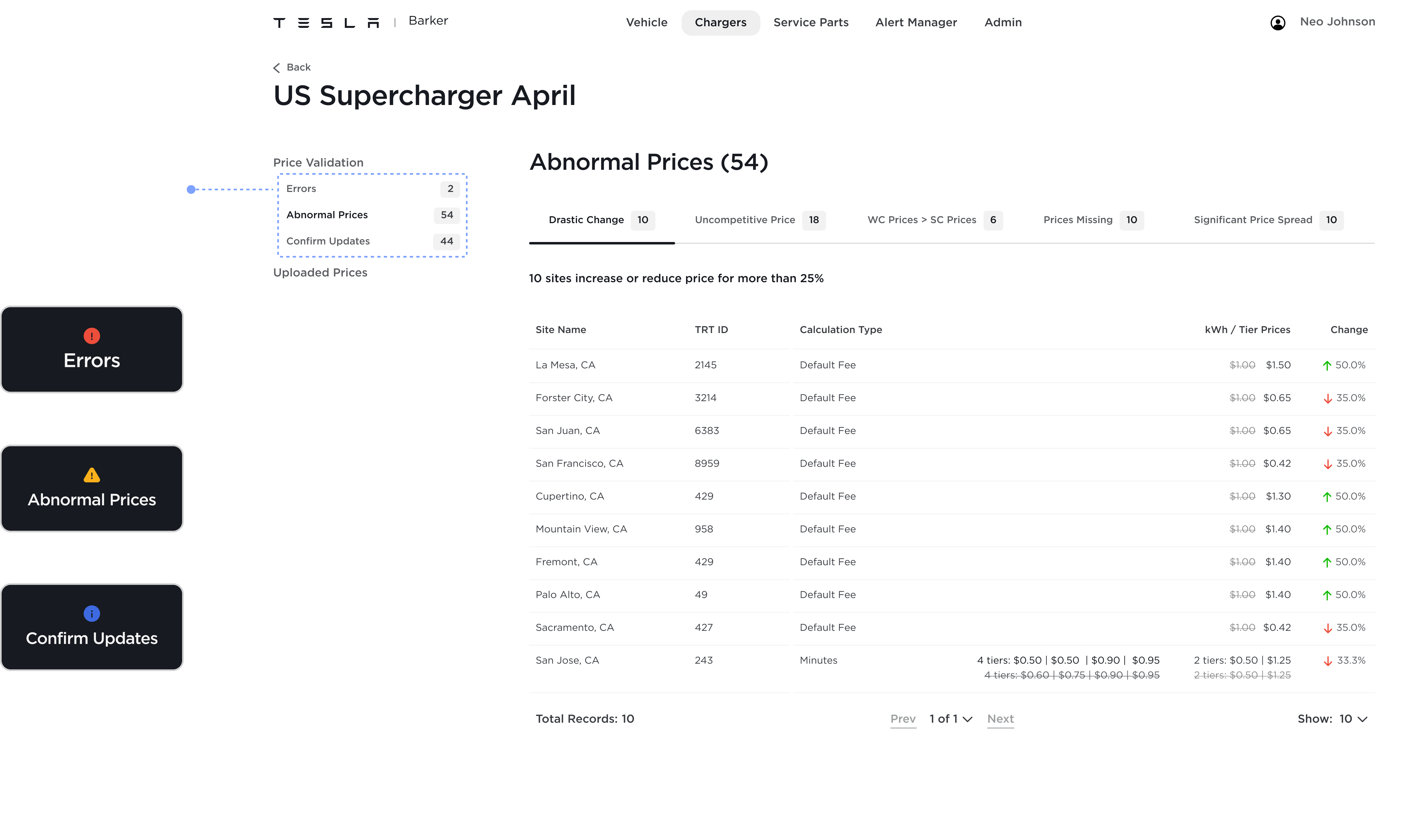
Price Validation
Automatically detected pricing anomalies before approval.
Automation and Continuous Development
This final phase remained on the product roadmap when I left Tesla. Looking back, it's interesting to see how closely its vision aligns with today's AI-native enterprise software — from workflow execution to decision support and intelligent automation.
Measurable Impact
"The platform enables us to make pricing decisions faster, with greater confidence and flexibility."

What I Took Away
Designing for Decision Confidence
The most valuable enterprise products don't just help users complete tasks — they help them make confident decisions.
Context Before Intelligence
Improving pricing decisions wasn't about adding smarter features. It started with bringing fragmented data, workflows, and collaboration into one place.
From Execution to Decision Support
Looking back, the roadmap evolved from executing workflows to supporting decisions — a direction that closely mirrors how AI is reshaping enterprise software today.